Airflow Measurement

Airflow Measurement Drives Better Outcomes

Accurate airflow measurement plays a central role in modern mechanical systems and building performance. Measuring outdoor air, supply, return, and exhaust airflow enables better control of ventilation, energy use, and building pressurization. Without reliable data, it becomes difficult to verify code compliance, maintain consistent indoor air quality, and ensure occupant comfort and well-being.

Why Airflow Measurement Matters

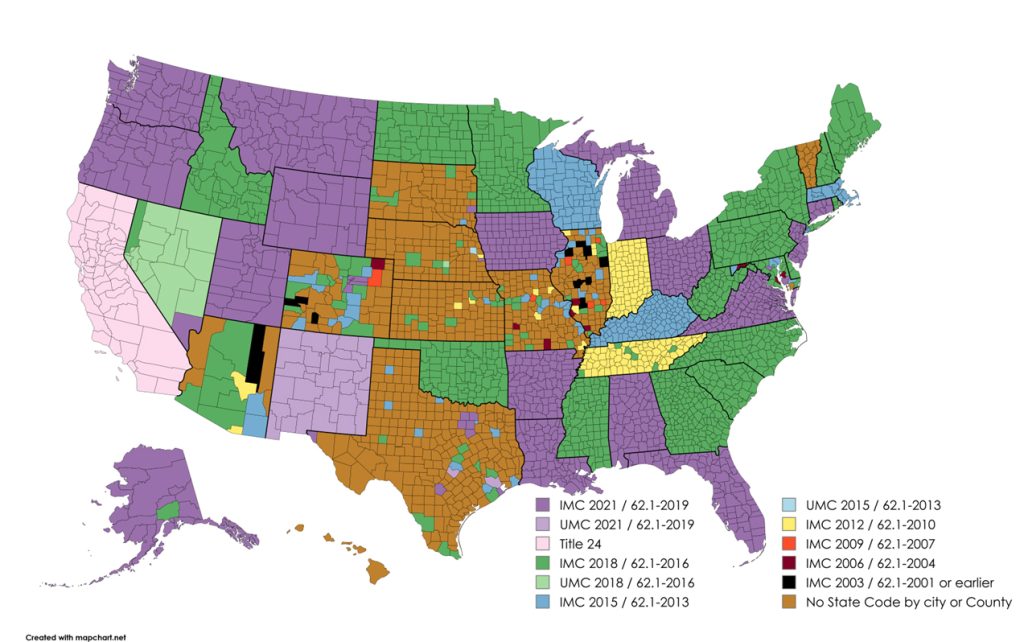
  • Verify ventilation rates meet codes and standards such as ASHRAE 62.1, California Title 24, and project design conditions.
  • Helps protect indoor-air-quality (IAQ), occupant comfort, and overall occupant well-being.
  • Enables energy-efficient control strategies such as demand-control-ventilation (DCV) and economizer operation.
  • Essential for maintaining proper building pressurization, especially in critical spaces like healthcare, labs, cleanrooms, and other sensitive environments.
  • Identifies system issues early—such as changes in fan performance or airflow imbalances—before they affect occupant comfort or energy use.
  • Reduces owner and engineer liability with documented performance and compliance.

Where Airflow Measurement Applies in HVAC Systems

Airflow measurement is used across multiple system types to support occupant health, energy optimization, ventilation control, and code compliance in both new construction and retrofit environments.
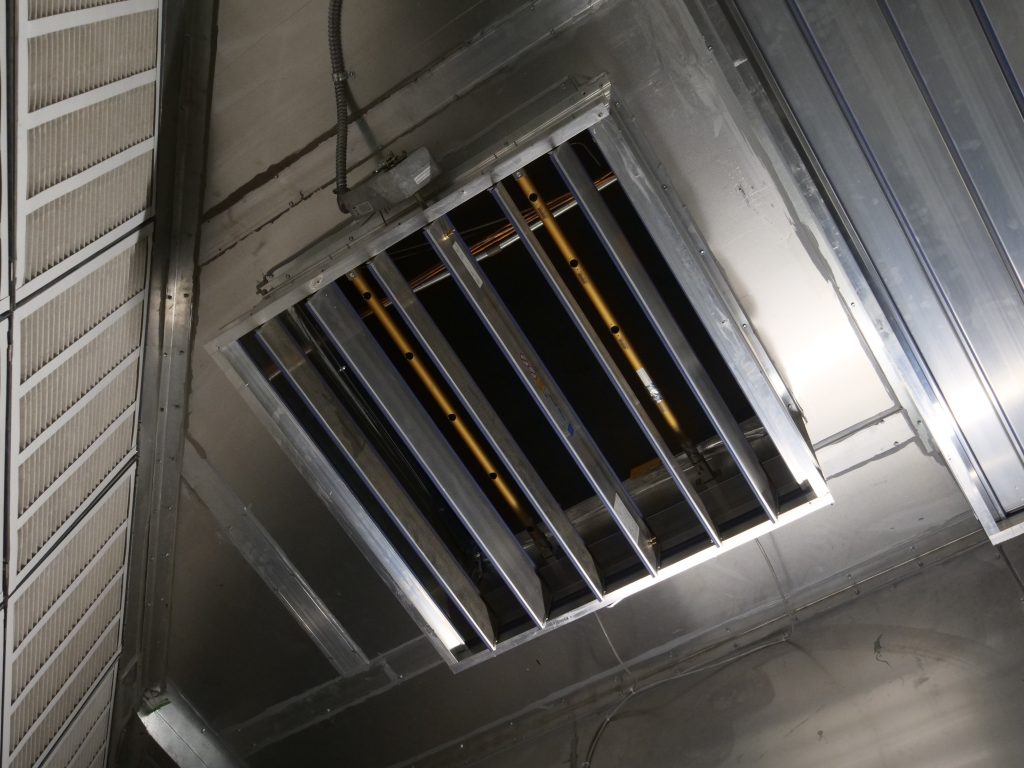
  • Outdoor air intakes: Verify ventilation delivery at air handlers and rooftop units.
  • Supply Paths: Ensure stable airflow delivery for temperature control and low-flow operation.
  • Return & Relief Paths: Balance return/exhaust airflow with supply to support building pressure control.
  • Exhaust Systems: Monitor restroom, general exhaust, and specialty/fume exhaust volumes.
  • Terminal Units (VAV/FCU): Provide zone-level airflow verification for comfort and demand-control ventilation.
  • Critical Pressure Zones: Maintain directional airflow and pressure relationships in hospitals, labs, isolation rooms, and cleanrooms.
  • High-Performance Facilities: Applied in schools, universities, commercial buildings, data centers, arenas, and other large or complex facilities.

Key Considerations when Choosing Airflow Measurement Solutions

Not all airflow solutions perform the same—and differences between measurement types and technologies can dramatically affect airflow accuracy, energy performance, and performance of your building. The right solution should deliver accurate, repeatable, and drift-free data across the full operating range. Key considerations include

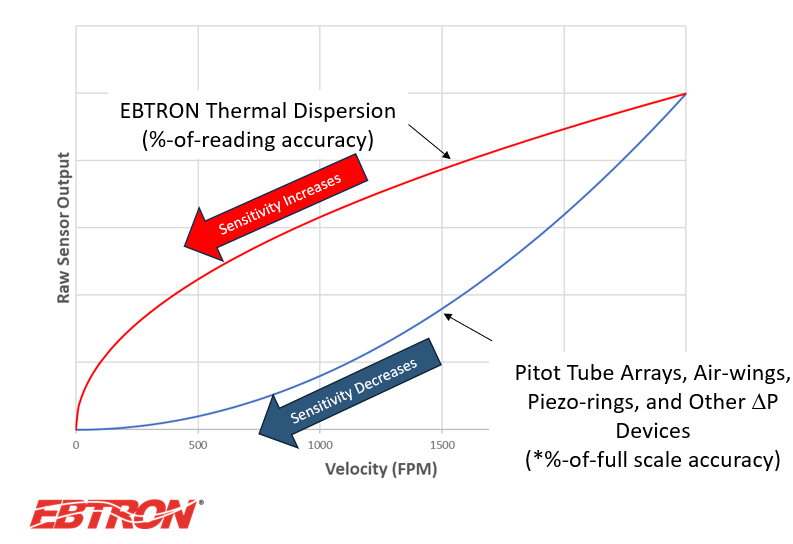
  • Measurement Method: Differences between thermal dispersion (EBTRON), differential pressure devices, and other technologies strongly influence accuracy, low-flow sensitivity, and stability in real system conditions.
  • Installed Accuracy: Lab accuracy does not reflect real-world performance. Actual installed accuracy depends on sensor placement, velocity profile sensitivity, stratification, and how well the technology performs outside ideal test conditions.
  • Low-Flow Performance: Ability to accurately measure outdoor air intakes, minimum ventilation rates, and turndown airflow—where many technologies experience significant error.
  • Maintenance & Calibration Drift: How long the sensor(s) maintains accuracy without frequent field adjustment or recalibration.
  • Environmental Durability: Reliability in dirty outdoor air, high humidity, stratified mixed air, and other challenging field environments that often degrade airflow measurement performance.
  • Integration with BAS: Support for BACnet, Modbus, analog output, and multi-device networking to ensure reliable communication and control.

:

Codes, Standards, and Guidance Documents

Airflow measurement supports compliance with ventilation, indoor air quality, safety, and energy standards across multiple applications. Common codes and guidance documents that reference or depend on reliable airflow include:
Integrating Airflow Measurement into Your Project

Whether you’re evaluating a new system or troubleshooting existing performance, accurate airflow measurement supports better decision-making, more stable control, and building outcomes.

Find a Local Rep

Find a Local Rep
Rep Finder

Select Your Country/Region

Enter your Zip Code

Find a Rep Near YouCancel
Rep Finder

Select Your Country/Region

Enter your Zip Code

FIND A REP NEAR YOU